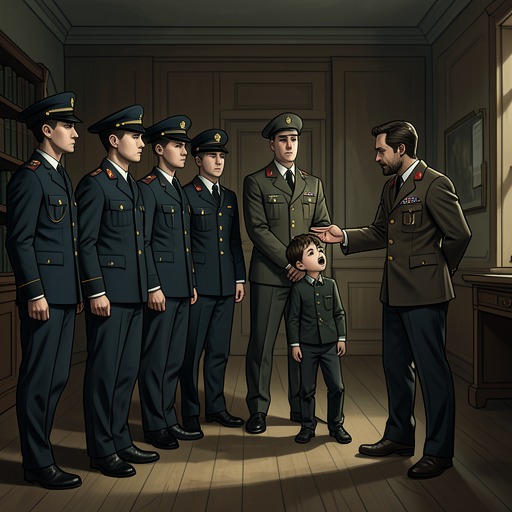
What you could be
All the Light We Cannot See“What you could be” is a recurring phrase that joins tenderness to loss. In Werner Pfennig’s last moments with Frank Volkheimer, it names a possibility glimpsed in Werner; when it returns in memory and after Werner’s death, that possibility is shadowed by the life he did not get to live.
First Appearance: A Possibility in the Rubble
As Werner prepares to leave their cover, Volkheimer tells him to go. Werner looks at his torn jacket and shovel jaw, but also at the tenderness of his large hands. The phrase “What you could be” follows this perception: it is presented as Werner’s thought, not as spoken dialogue. The contrast makes the moment intimate without making it reassuring. Volkheimer sends Werner onward, while Werner’s attention rests on a gentleness that sits unexpectedly beside the soldier’s formidable appearance.
Werner then moves through the rubble carrying a canvas bag and a rifle, with five rounds left. The phrase thus accompanies a departure into uncertainty: the tenderness he has just recognized offers a fleeting measure of another possible self, while the ruined streets leave his immediate safety unresolved.
A Voice That Returns
Later, the phrase comes back as the voice of Volkheimer while Werner lies in a military tent. Around that remembered voice, the scene turns toward childhood: Werner sees Frau Elena tending the coal stove and baby Jutta asleep in her cradle, while his father lights a lamp and disappears into an elevator. Werner’s body seems weightless beneath the blanket; then he rises and walks out into the grass, past a sleeping American soldier.
The recurrence connects Volkheimer’s words to Werner’s remembered home and to his movement out of the tent. The phrase does not explain that action, but its return places an earlier recognition of possibility beside a moment when Werner appears detached from his present surroundings.
Remembrance After Werner’s Death
The last recurrence appears in Volkheimer’s thoughts after the guns have fallen silent. He wonders whether it was decent to leave Werner out there after he was dead. “What you could be” follows that question, and Volkheimer recalls Werner as small, white-haired, and apt to button his collar against the cold and draw his hands into his sleeves. He recognizes whom the items belonged to.
Here the phrase becomes inseparable from remembrance. What first accompanied Werner’s perception of Volkheimer’s tenderness now sits beside Volkheimer’s uncertainty about what he should have done and his recognition of Werner through the things he left behind. Its movement across these scenes gives the words their force: possibility is first seen in a living person, then remembered, and finally measured against an absence that cannot be undone.